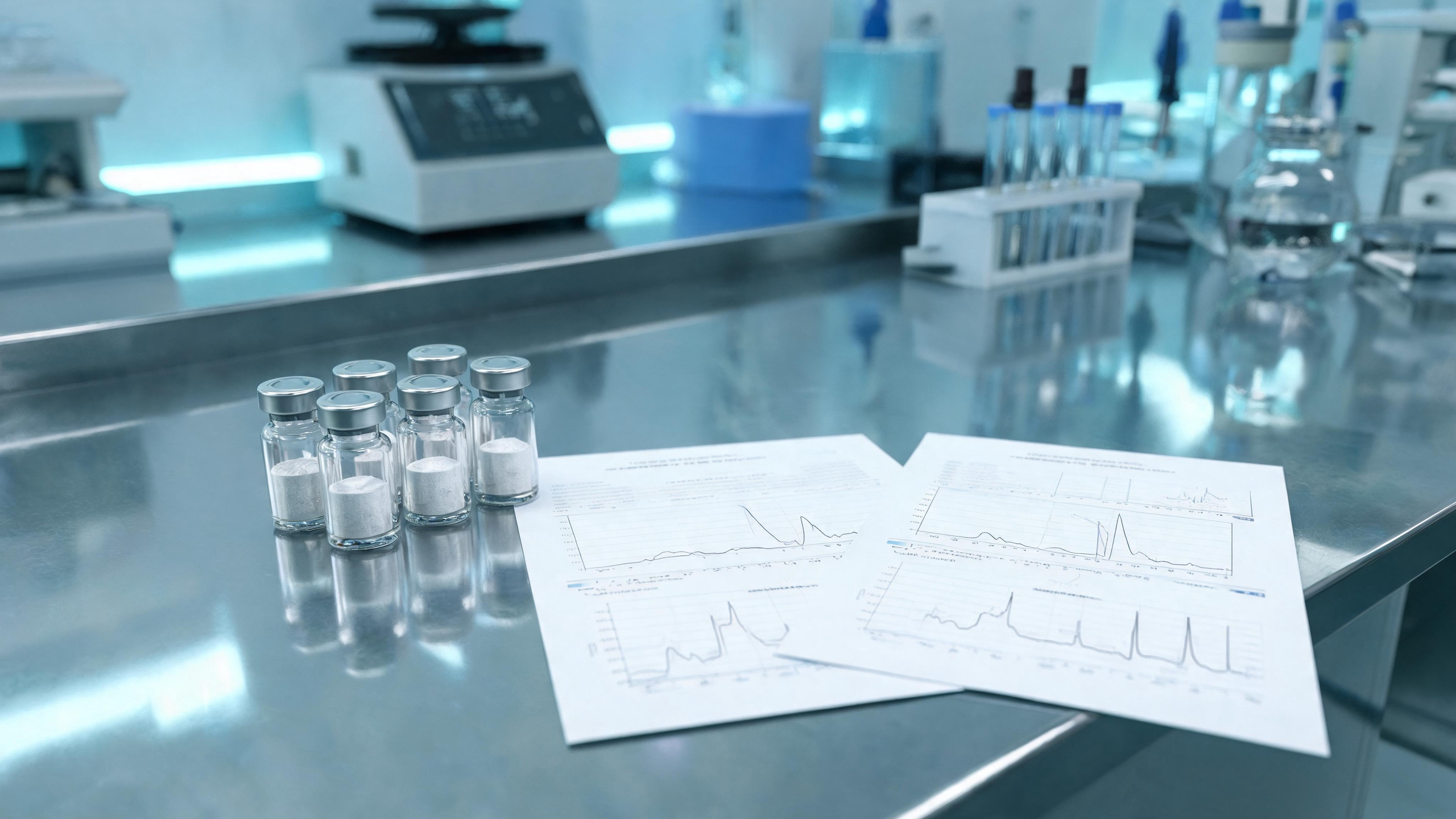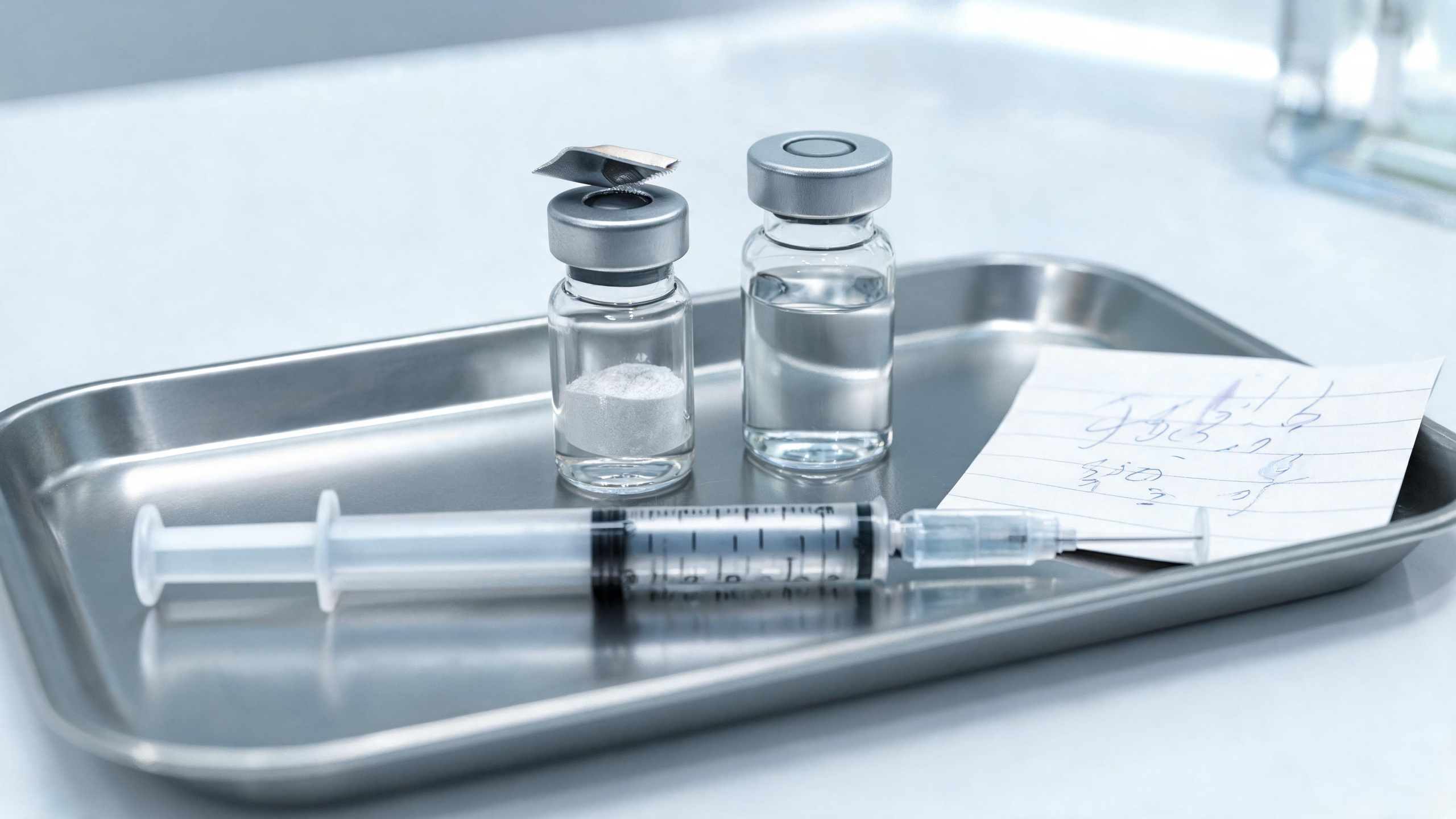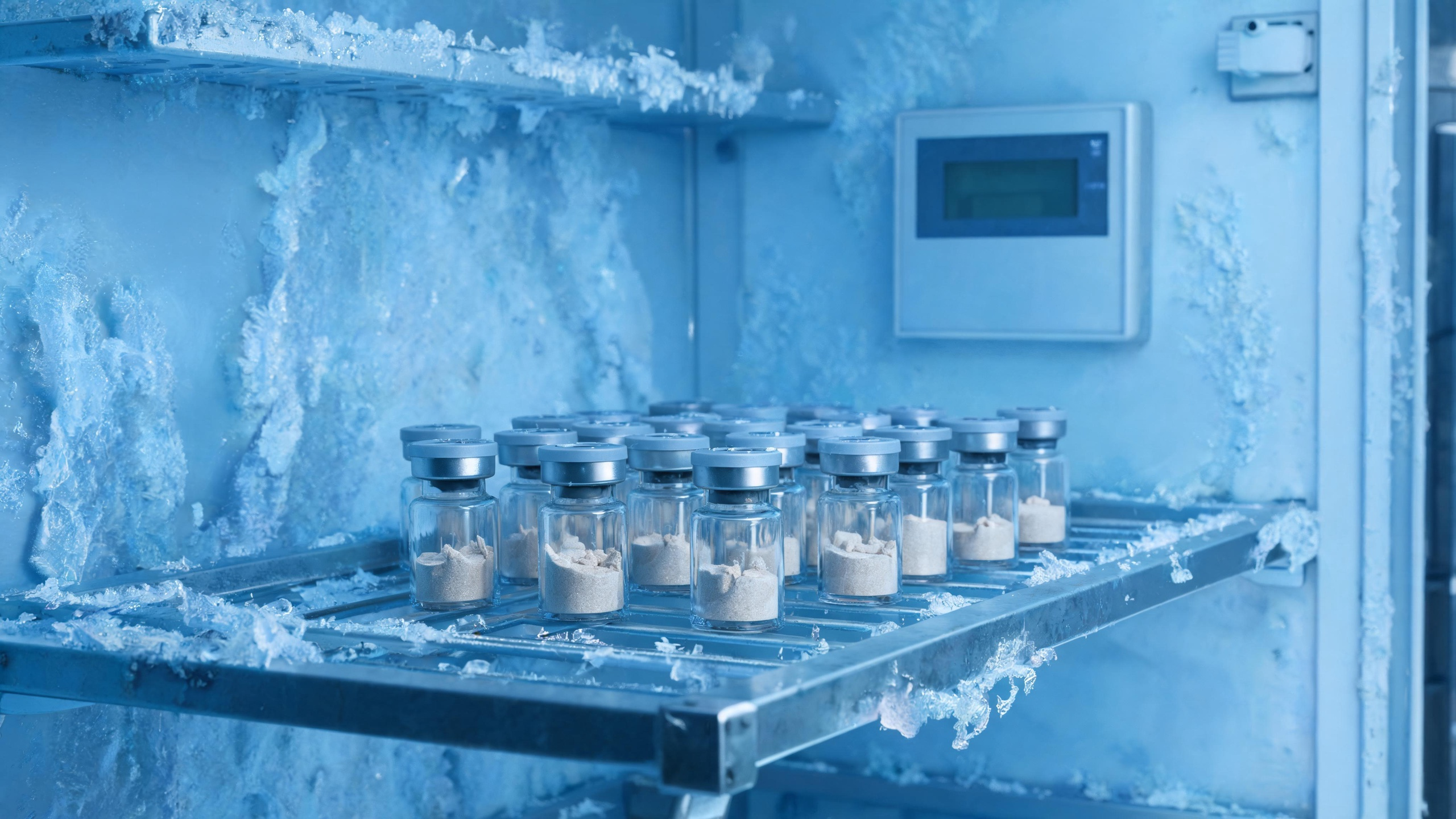
The "Desiccant Packs in your containers" thread on GLP1Forum reflects a community that has moved beyond beginner questions and is now asking the right ones. The real enemy of lyophilized peptides is not temperature — it is moisture migration during freeze-thaw cycling. Every time your domestic refrigerator cycles, micro-condensation forms inside the vial, and that single droplet of liquid water is enough to trigger hydrolysis of the peptide backbone.
The Freeze-Thaw Problem Nobody Talks About
A household refrigerator-freezer cycles 20-30 times per day with temperature swings of ±5°C. Each cycle pulls a trace amount of moisture into the vial headspace. Over weeks, this accumulates into a hydrolysis-triggering micro-droplet — and the peptide degrades with no visible warning sign. The solution is operational, not technological: separate your inventory.
The Operational Research Workflow
- Long-term stock → dedicated -20°C lab freezer (not the kitchen unit with your frozen vegetables). Avoid self-defrosting models — the defrost cycle is a temperature spike.
- Working stock → 2–8°C refrigerator. Pull only 4-8 weeks of material at a time. Never return unused vials to the freezer — once thawed, keep refrigerated and use within the stability window.
- Desiccant: medical-grade silica gel only (USP <671> compliant). Food-grade packets off-gass volatile organics that can interact with sensitive peptides like GHK-Cu.
- Post-reconstitution: aliquot into multiple sterile cryovials. Each septum puncture introduces ~0.1 µL contamination risk. Two to three test parameters per cryovial, stored at 2–8°C, used within the compound's reconstituted stability window.
Thermal Stress on Glass Vials
Direct transfer from ambient to -20°C creates thermal shock stress on borosilicate glass. Refrigerate new shipments at 2–8°C for 24 hours before freezing. This allows the lyophilized cake and glass wall to reach thermal equilibrium gradually, preventing micro-fractures that admit moisture over time.
Ourovia research note: Our vials ship in insulated packaging rated for 72 hours of ambient transit. Upon receipt, refrigerate for 24 hours, then transfer long-term stock to -20°C and working stock to 2–8°C. Every Ourovia vial includes a Batch ID and manufacture date — use these to track age and rotate stock on a first-in-first-out basis.